
What Falling Fatalities and Rising Injuries Really Mean
This article is based on insights and data from the International Road Federation’s “The Uneven Road to Zero: Data Gaps and Disparities in Global Road Safety,” published on the IRF World Road Statistics website.
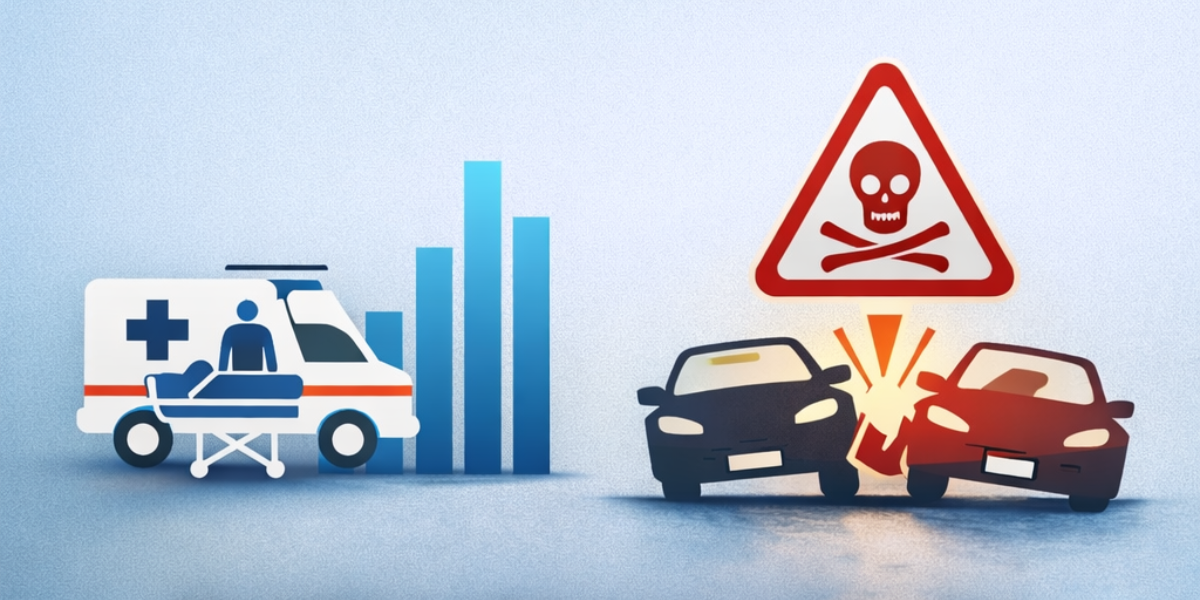
When road fatalities decline, it is often taken as the clearest measure of success in road safety—and rightly so. Fewer deaths mean that roads, vehicles, and response systems are doing something better than before. Yet in many highly motorised countries, this progress comes with an apparent contradiction: while fatalities continue to fall, injury numbers remain high. Rather than signalling failure, this pattern points to a critical shift in outcomes. Crashes that might once have been fatal are increasingly survivable. The growing gap between injuries and deaths reflects the strength of modern road safety systems—systems designed not only to prevent crashes, but to protect people when prevention is not enough.
Not All Crashes Are Equal
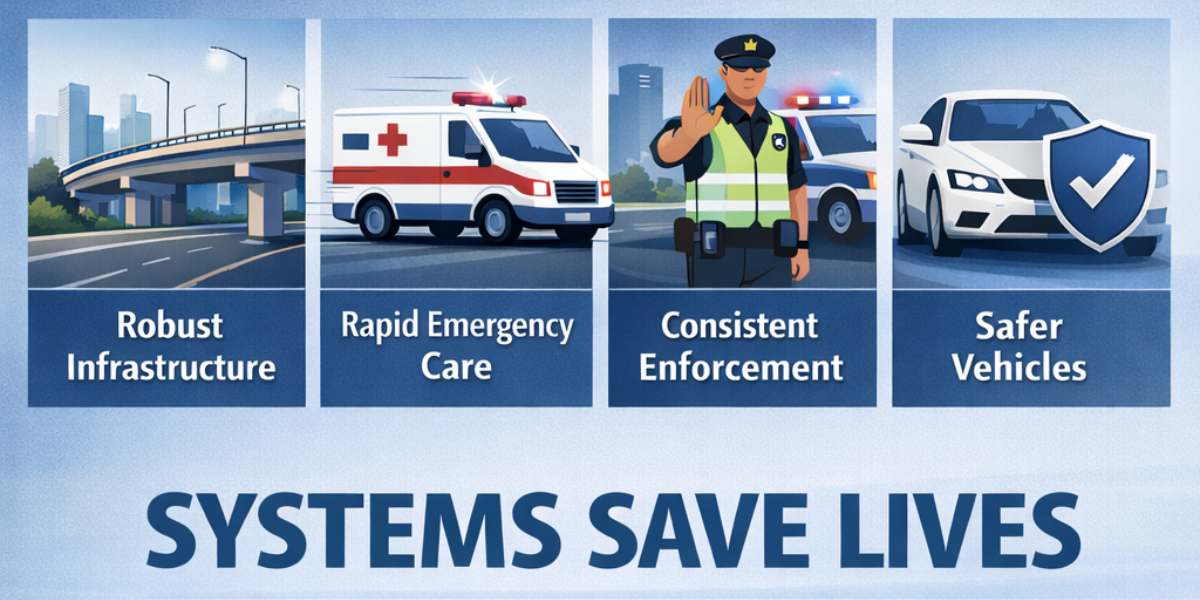
A crash is not a single moment but an event shaped by what happens before, during, and after impact. Two collisions that look similar on paper can have very different outcomes depending on road design, vehicle safety standards, and how quickly help arrives. In stronger safety systems, the focus is not only on avoiding crashes altogether, but on reducing their severity. Energy-absorbing road barriers, safer intersections, airbags, seatbelts, and speed management all play a role in turning potentially fatal crashes into survivable ones. As a result, injuries may still occur, but the likelihood of death is significantly reduced. This is why rising injury numbers alongside falling fatalities should be read as evidence of improved protection, not increased danger.
What High-Income Countries Do Differently
High-income countries illustrate this dynamic clearly. Despite high levels of motorisation and dense traffic networks, many of these countries record relatively low road fatality rates. One key reason is the strength of their post-crash response. Faster emergency detection, efficient dispatch systems, and advanced trauma care mean that injured road users receive medical attention within critical time windows. Combined with safer vehicles and more forgiving road infrastructure, these systems increase survival even when crashes are unavoidable. The result is a higher proportion of injuries relative to deaths—an outcome that reflects resilience rather than risk.
Where Higher Fatality Rates Persist
In contrast, middle-income countries often experience higher fatality rates from comparable crash volumes. Here, the issue is less about the frequency of crashes and more about their consequences. Delays in emergency response, limited access to trauma care, and road environments that offer little protection can turn survivable injuries into fatalities. This contrast highlights an important lesson: reducing deaths is not solely a matter of individual behavior or enforcement. It depends heavily on whether systems are in place to absorb impact, respond quickly, and sustain life after a crash occurs.
Safety Is Measured by Outcomes, Not Just Crashes
Ultimately, road safety should be judged by outcomes. A truly safe system is one that minimises death and reduces the severity of injuries, even when mistakes happen. Technology plays a supporting role here—helping detect crashes, speed up response times, and generate better data for prevention—but it is most effective when embedded within strong policies, infrastructure, and medical systems. The takeaway is clear: falling fatalities alongside high injury numbers are not a contradiction. They are a sign that safety systems are working to save lives, even in an imperfect world where crashes still happen.

