
The Global Road Safety Data Gap
When we talk about road safety, the conversation usually starts with crashes. We look at death counts, trends, and comparisons across countries. But the real issue may not just be what is happening on the roads. It may be what never shows up in the data at all.
This blog is based on insights from the International Road Federation and its latest work on global road safety. Their findings highlight a critical but often overlooked challenge: many of the world’s most dangerous roads are also the least visible in official statistics.
Where Risk Is High, Visibility Is Low
Most road deaths globally occur in low- and middle-income regions. This is striking because these regions have fewer registered vehicles than high-income countries, yet they account for the majority of road fatalities. Fewer vehicles do not automatically mean safer roads.
The reason is visibility. In many countries, crashes are not consistently recorded, injuries go unreported, and deaths may never be officially classified as road-related. As a result, places facing the highest risk often appear less dangerous on paper. High risk does not always come with high visibility.
Why the Numbers Fall Short
The IRF World Road Statistics report points to widespread underreporting of road fatalities and injuries, especially in lower-income regions. This is not always due to a lack of concern, but often due to limited capacity. Reporting systems may be fragmented, coordination between agencies may be weak, and data collection may not be a priority when resources are stretched thin.
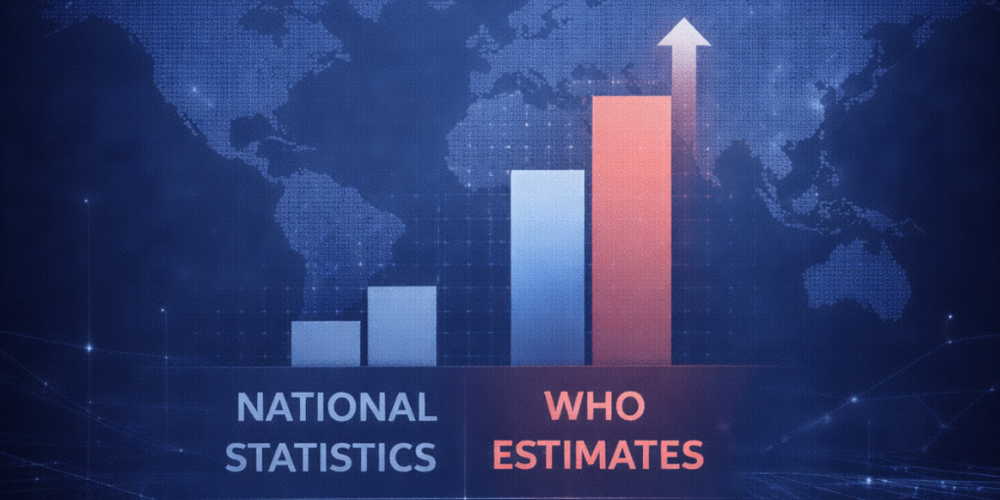
When official numbers do not capture reality, the scale of the problem is underestimated. This creates a false sense of progress and makes road safety challenges harder to address effectively.
What the Fatality–Injury Gap Tells Us
IRF data also reveals an important pattern in upper middle-income countries. Fatality rates remain high compared to reported injuries. This suggests that while motorisation is increasing, safety systems are not advancing at the same pace.
More vehicles are entering the system faster than improvements in road design, enforcement, and emergency response. Crashes continue to happen, but their consequences are more severe. The gap between injuries and deaths tells a story of systems struggling to keep up with rapid change.
Why Better Data Matters
When crashes are underreported, the impact extends far beyond statistics. Poor data affects how policies are designed, where infrastructure funding is directed, and which safety measures are prioritised. Over time, this shapes the safety outcomes people experience on the road every day.
You cannot improve what you cannot measure. Reliable data is not just a technical requirement. It is the foundation for accountability, smarter decisions, and safer roads for everyone.
This article is based on insights and data from the International Road Federation. You can read the original IRF article here:
👉 https://worldroadstatistics.org/the-uneven-road-to-zero-data-gaps-and-disparities-in-global-road-safety/

