
Choosing a Dashcam: Understanding the Trade-Off Between Price and Features
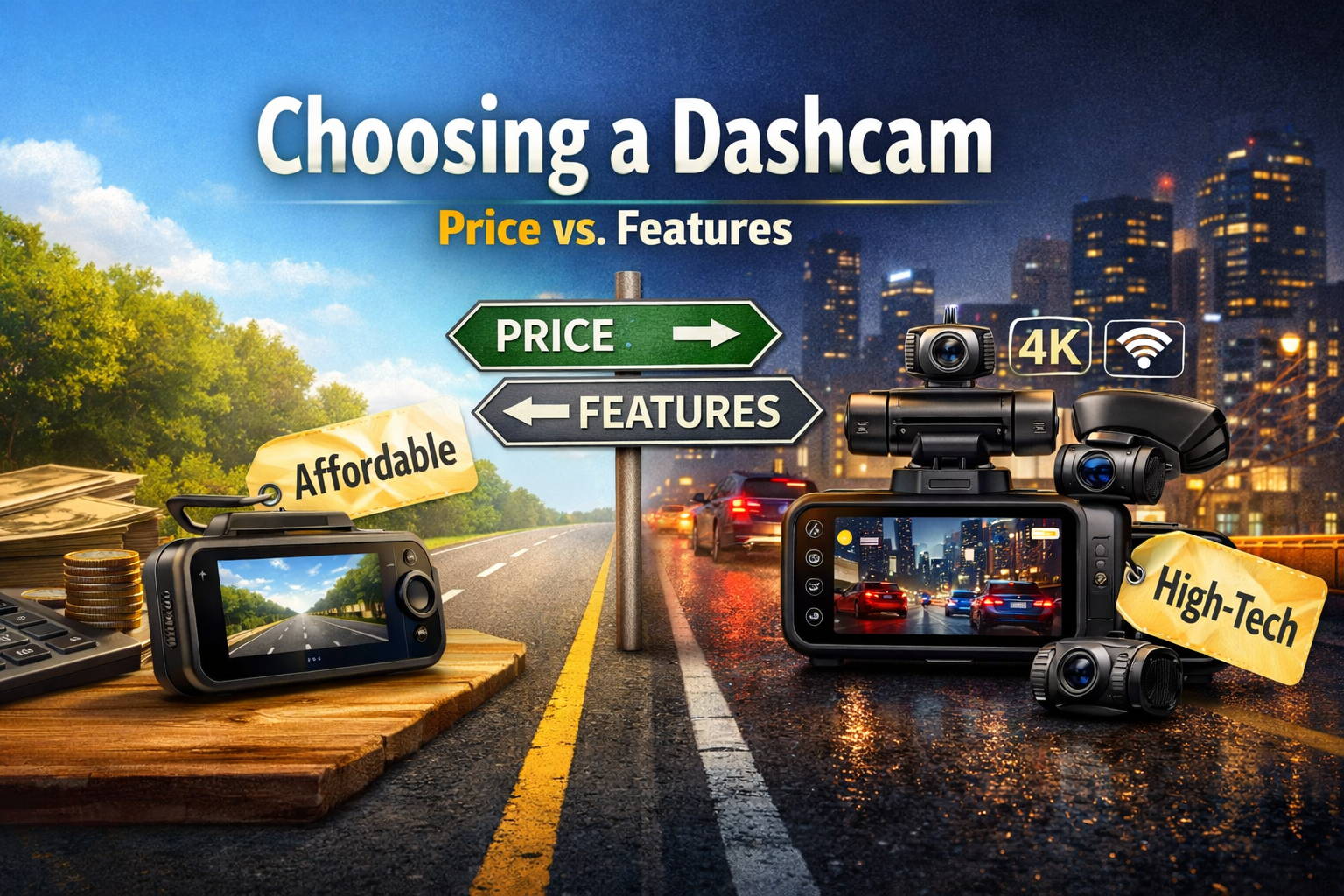
Many buyers compare price and specifications when choosing a dashcam.
Product pages often highlight numbers such as video resolution, sensors, frame rates, storage support, and additional features. These specifications can make it easier to compare different models at first glance.
However, many consumers are not familiar with what these numbers actually mean in real-world driving situations. Because of this, deciding whether a higher-priced model is worth it—or whether a simpler device will do the job—can sometimes feel confusing.
In reality, choosing a dashcam is often about understanding the trade-offs between price, features, and everyday reliability.
What Higher Specifications Usually Mean
Higher-priced dashcams often include features such as higher video resolution (for example, 2K or 4K recording), multi-channel setup, advanced image sensors, and additional connectivity options.
In certain situations, these specifications can improve performance. Higher resolution may capture finer details, while additional cameras can provide a wider view of what happens around the vehicle.
At the same time, higher specifications can also come with practical trade-offs. More advanced features may increase the overall cost of the device, require more power to operate, or generate more heat during continuous recording.
For some drivers, these improvements are valuable. For others, they may not make a noticeable difference in everyday use. Not every driver needs every available feature.
When Higher Specs Can Be Helpful
Investing in higher specifications may be beneficial in certain situations.
Drivers who frequently travel at night may benefit from dashcams equipped with better sensors, which can help capture clearer footage in low-light conditions. In busy urban environments, higher resolution can sometimes make it easier to identify details such as license plates or events on the road.
Advanced features can also be useful for drivers who rely heavily on parking mode or want more detailed recordings in case of accidents or disputes. Some users also enjoy having access to the latest technology and prefer dashcams with a wider range of capabilities.
Higher-resolution recording can also appeal to drivers who enjoy documenting their journeys. For example, those who take road trips, drive through scenic routes, or occasionally share driving footage online may appreciate clearer and more detailed video.
In these cases, the higher price may reflect features that align with how the dashcam will be used.

When Simpler Dashcams May Be Enough
For many drivers, the main purpose of a dashcam is straightforward: recording events on the road for documentation.
Drivers who mainly use their vehicles for daily commuting or routine travel may find that a simpler dashcam meets their needs. Basic models can still capture important moments on the road while being easier to install and operate.
A simpler device may also come with a lower purchase cost and fewer features to manage.
The trade-off is that these models may offer fewer advanced capabilities. However, they can still provide the core function many drivers are looking for—reliable recording of everyday driving.
Looking Beyond Specifications: Everyday Reliability
Specifications are only one part of the decision. Long-term reliability can be just as important.
Factors such as stable recording, reliable memory card compatibility, temperature tolerance, and consistent power management all affect how a dashcam performs over time.
For many drivers, the priority is simply having a device that records consistently and works reliably whenever it is needed. In these cases, dependable performance may matter more than having the latest specifications.
Choosing Based on Your Needs
There is no single “best” dashcam for everyone.
The right choice depends on factors such as your budget, your driving environment, and how you plan to use the device.
Understanding the trade-offs between price and features can help buyers choose a dashcam that fits their needs—without necessarily paying for capabilities they may not use.