
How Your Driving Environment Should Influence Your Dashcam Choice
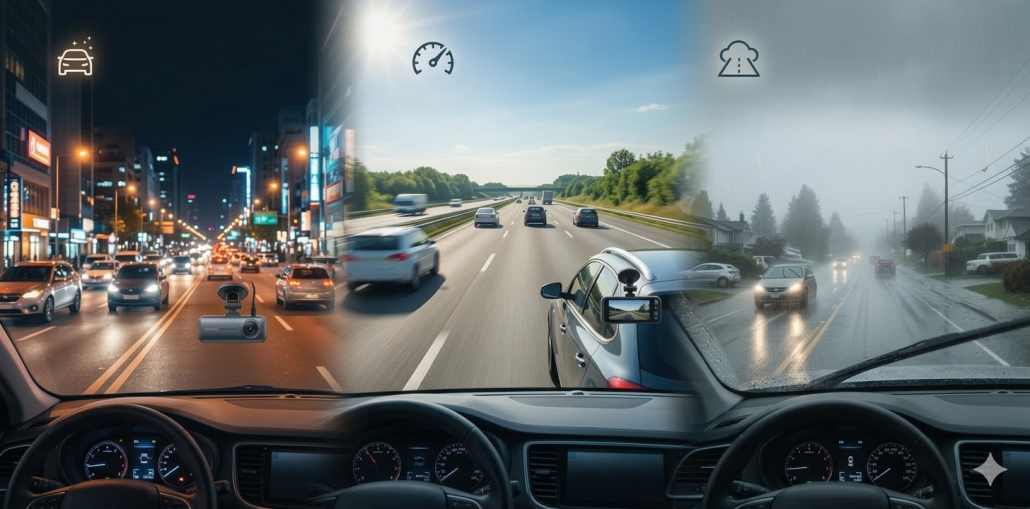
When choosing a dashcam, many drivers start by comparing specifications such as resolution, price, or additional features. While these details can be helpful, they do not always tell the full story. A dashcam spends its entire life recording real-world driving conditions, which can vary significantly depending on where and how the vehicle is used.
Factors such as license plate design, road lighting, traffic patterns, weather conditions, and typical driving speeds can all influence how well a dashcam captures important details. Because of this, the features that matter most often depend on the driver’s everyday environment. Understanding these conditions can help drivers prioritize the specifications that are most relevant for their situation.
License Plate Size and Visibility
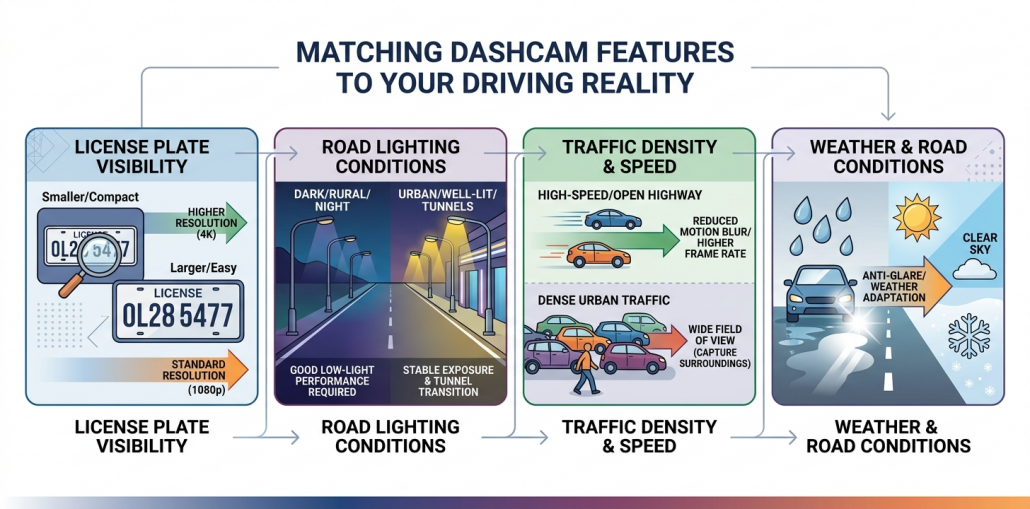
License plate designs vary between countries and regions. Some places use larger plates that are relatively easy to read from a distance, while others use smaller or more compact formats. Character size, spacing, and reflectivity can also differ.
These differences affect how easily a dashcam can capture readable details in recorded footage. When plates are smaller or more difficult to read, capturing clear detail becomes more important.
In regions where plates are generally easier to read, Full HD (1080p) resolution may already provide sufficient clarity for everyday driving. In environments where plates appear smaller or vehicles are often recorded from greater distances, higher resolutions such as 2K or 4K can help capture finer details.
For drivers comparing dashcams, it can be helpful to think about how readable license plates typically are on local roads rather than focusing on resolution numbers alone.
Lighting Conditions on the Road
Lighting conditions can vary greatly depending on where people drive. Urban areas often have well-lit streets, while residential neighbourhoods, rural roads, and highways may be significantly darker. Drivers may also encounter sudden changes in lighting when entering tunnels or underground parking areas.
Dashcams rely on image sensors and automatic exposure adjustments to adapt to these changes. When lighting shifts quickly, the camera must adjust in real time to maintain a balanced image.
For drivers who frequently travel on darker roads or drive at night, how well a dashcam handles low-light conditions can become more important than simply increasing resolution. Good night recording performance helps ensure that important details remain visible even when lighting is limited.
Traffic Density and Driving Situations
Driving environments also differ in terms of traffic density. Some drivers regularly navigate busy city streets filled with vehicles, pedestrians, and frequent stops. Others spend more time on open highways where traffic is lighter but speeds are higher.
In dense urban traffic, incidents can involve multiple vehicles within a relatively small area. In these situations, a wider field of view can help capture activity across surrounding lanes.
Consistent and stable recording is also important in busy environments, where unexpected events may happen quickly. A dashcam that records smoothly without interruptions helps ensure that key moments are captured clearly.
Weather and Road Conditions
Weather conditions can also affect how dashcam footage appears. Rain, snow, fog, or dust can reduce visibility and make fine details harder to see. Wet roads may reflect headlights or streetlights, sometimes creating glare in the camera’s view.
Dashcams rely on image sensors and internal processing to adjust to these conditions, but the environment still plays an important role in how clear the recorded footage appears.
Drivers who frequently encounter challenging weather conditions may benefit from dashcams designed to maintain stable recording and clear footage even when visibility changes.
Driving Speed and Distance Between Vehicles
Driving speed can also influence how much detail a dashcam is able to capture. In congested city environments, vehicles are usually close together and travel at relatively low speeds. On highways, however, vehicles may pass each other quickly.
When vehicles move at higher speeds, a dashcam may only have a brief moment to capture important details such as license plates or road events. In these situations, higher resolution and smoother video recording can help reduce motion blur and preserve detail.
Drivers who frequently travel on high-speed roads may therefore benefit from dashcams capable of capturing clear footage even during fast movement.
Choose Features That Match Your Driving Reality
Dashcams are designed to capture unexpected moments on the road, often in conditions that are far from ideal. Because driving environments vary widely, the most suitable dashcam is not always the one with the most impressive specifications on paper.
Instead, it is helpful to consider how and where the vehicle is typically driven. By prioritising features that match everyday driving conditions—such as lighting, traffic density, weather, and speed—drivers can choose a dashcam that provides clear and dependable footage when it matters most.