
Asia’s Road Safety Challenge
This article is based on insights and data from the International Road Federation’s “The Uneven Road to Zero: Data Gaps and Disparities in Global Road Safety,” published on the IRF World Road Statistics website.
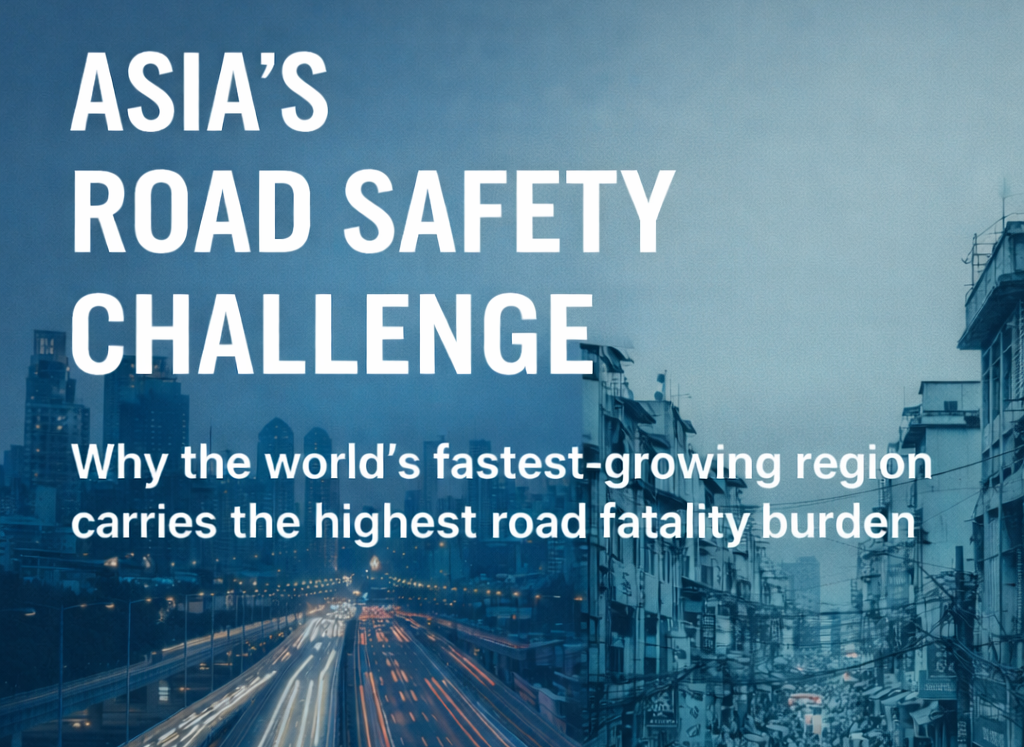
Asia sits at the center of the global road safety challenge. Home to some of the world’s fastest-growing economies and most densely populated cities, the region has experienced rapid motorization over a relatively short period of time. Millions of people now share roads designed for far fewer vehicles, creating complex traffic environments where risk is high and safety systems are under constant pressure. As a result, Asia accounts for the largest share of road traffic deaths worldwide. Understanding why this burden remains so heavy—and what it reveals about safety systems, exposure, and accountability—is essential for reducing global road fatalities in any meaningful way.
Asia’s Disproportionate Share of Global Road Fatalities
Asia accounts for more than half of the world’s road traffic deaths—approximately 52.7 percent—despite wide differences in income levels, infrastructure quality, and safety performance across the region. This share is significantly higher than that of regions such as Europe, where decades of coordinated safety policies have helped keep fatality numbers comparatively low. The scale of Asia’s burden reflects not just population size, but the sheer volume of daily exposure on its roads. It also underscores the importance of reliable data. In many countries, underreporting and inconsistent definitions still obscure the true human cost of road crashes, making it harder to design targeted interventions or track progress over time.
Rapid Motorization and Rising Exposure
One of the defining factors behind Asia’s road safety challenge is the speed at which motorization has taken place. In many countries, vehicle ownership has grown far faster than road infrastructure, traffic management, and safety systems can adapt. High population density further amplifies this risk, concentrating vehicles, pedestrians, and public transport into limited road space. As exposure increases, so does the likelihood of crashes—even when individual risk per trip remains unchanged. This dynamic helps explain why regions experiencing rapid growth often see persistently high fatality numbers: safety improvements struggle to keep pace with the expanding scale of mobility.
Vulnerable Road Users in Dense Traffic Environments
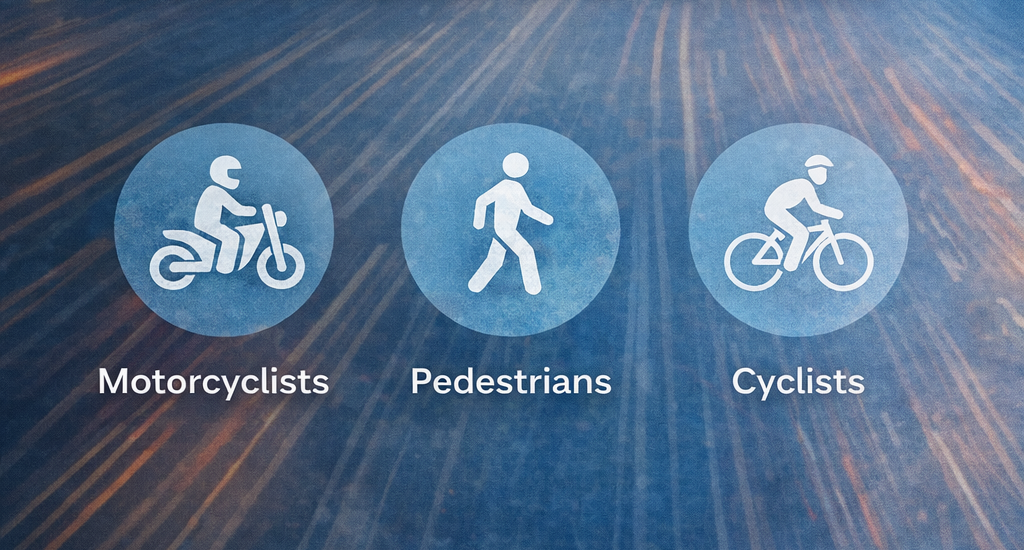
Dense traffic environments across Asia place vulnerable road users at particular risk. Motorcyclists, pedestrians, and cyclists make up a large share of daily road users, especially in urban areas where two-wheelers offer an affordable and flexible mode of transport. These users often travel alongside larger, faster vehicles with little physical protection, increasing the likelihood of serious injury in a crash. Road designs that prioritize vehicle flow over separation, combined with informal road-sharing practices, further heighten exposure. The result is a traffic mix where the most vulnerable bear a disproportionate share of the consequences.
Progress That Hasn’t Kept Pace
Progress in road safety across Asia has been uneven. Some higher-income countries in the region have managed to stabilise or gradually reduce fatality rates through safer infrastructure, stronger enforcement, and improved emergency response. In many developing and rapidly urbanising countries, however, safety improvements have struggled to keep pace with growth. As vehicle ownership and travel demand expand, gaps in road design, enforcement capacity, and post-crash care become more visible. This divergence explains why, despite pockets of progress, Asia’s overall road death numbers remain high: improvements in some countries are offset by rising risk and exposure in others.
Awareness, Accountability, and System Responsibility
Awareness and accountability play a critical role in shaping road safety outcomes, but they cannot operate in isolation. Driver behaviour, risk perception, and compliance with traffic rules are influenced by how consistently laws are enforced and how clearly responsibility is defined. In countries where enforcement is visible and predictable, safer behaviour tends to follow. Where accountability is weak, risk-taking becomes normalised. Public awareness campaigns can help shift attitudes, but lasting change depends on systems that reinforce safe choices—through regulation, enforcement, data, and clear consequences. Ultimately, safer roads are not just a matter of individual responsibility, but of collective system design.
Conclusion — Scaling Safety Faster Than Vehicles
Asia’s road safety challenge is ultimately a question of pace. Motorisation and mobility are expanding rapidly, but safety systems have not always grown at the same speed. Closing this gap requires clear, practical action: safer road design that separates vulnerable users from fast-moving traffic; consistent speed management and drink-driving enforcement; faster crash detection and emergency response; and trauma care that reaches victims within critical time windows. Equally important is reliable data—accurate crash reporting, injury tracking, and exposure metrics—so risks can be identified and addressed early. When supported by technology such as incident detection, fleet monitoring, and better data integration, these measures can scale safety alongside growth. Because Asia carries such a large share of global road deaths, progress here will shape global outcomes. Scaling safety faster than vehicles is not optional—it is essential.