
Why Climate Matters When Choosing a Dashcam
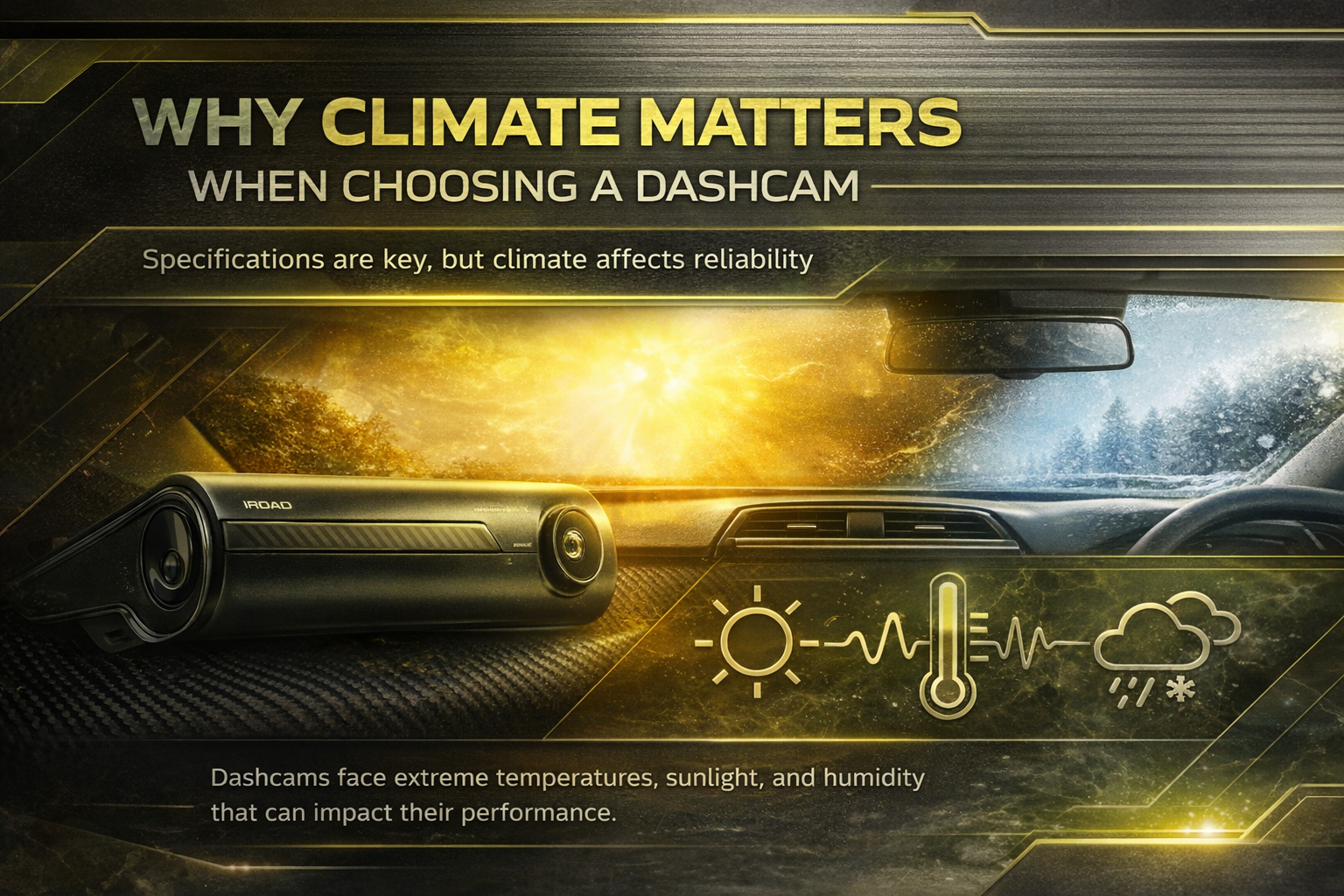
When comparing dashcams, many buyers focus on specifications such as video resolution, price, or extra features. While these factors can be useful, one important element is often overlooked: climate.
Unlike most electronic devices, dashcams spend their entire lives inside a vehicle. Mounted on the windshield, they are constantly exposed to sunlight, temperature swings, humidity, and seasonal weather conditions. Over time, these environmental factors can influence how reliably a dashcam performs. Understanding how climate affects a dashcam can help drivers choose a device that records consistently in real-world conditions.
Dashcams Operate in a Demanding Environment
A dashcam’s position on the windshield places it in one of the most challenging areas inside a car. The space near the glass receives direct sunlight during the day, often experiencing large temperature fluctuations within a short period.
Unlike smartphones or other electronics that are typically used indoors, dashcams remain in vehicles for long periods — whether the car is parked outside during the summer or left overnight in freezing winter conditions. Because of this, environmental durability is essential for reliable operation.
How High Temperatures Affect Dashcams
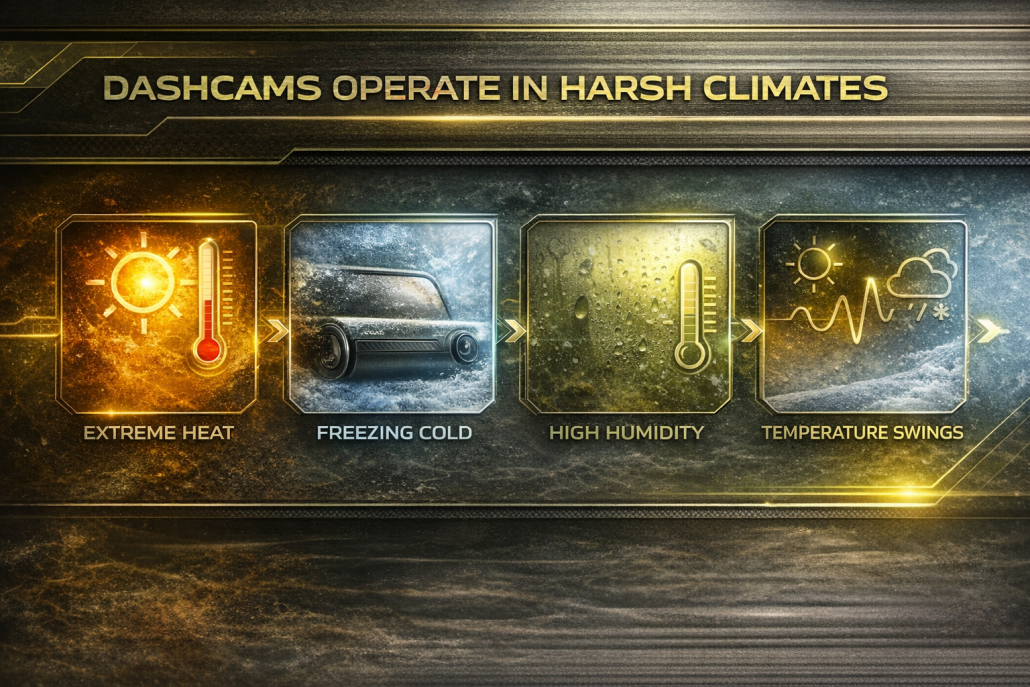
Heat is one of the biggest challenges for any dashcam. When a vehicle is parked under direct sunlight, interior temperatures can rise quickly.
Even when the outside temperature is around 30°C, the inside of a parked car can reach 50–60°C within an hour. The windshield area often becomes even hotter because it receives direct sunlight and has limited airflow.
Electronics operating in these conditions must tolerate prolonged heat exposure. Devices that are not designed for such environments may experience reduced performance or temporary shutdowns. For drivers, this means heat resistance plays an important role in ensuring the dashcam continues recording during hot weather.
Cold Weather Challenges
Cold climates introduce their own set of considerations. In regions with harsh winters, vehicles may remain parked for hours in freezing temperatures.
Very low temperatures can affect battery performance and may slow how quickly electronic components respond when the device powers on. Some cameras may take longer to start recording when the vehicle begins moving.
While many modern dashcams are designed to handle colder environments, checking the operating temperature range can help ensure reliable performance during winter.
Humidity and Long-Term Reliability
Humidity is another environmental factor that drivers may not immediately consider. In tropical or coastal regions, high moisture levels can affect electronics over time.
Condensation may form when temperature changes occur quickly, such as when a cold vehicle warms up. Over long periods, repeated exposure to moisture can impact the durability of electronic components. Dashcams designed for automotive environments typically take these conditions into account.
Storage Matters Too
Environmental conditions also affect the memory card inside the dashcam. Dashcams continuously record video while driving, constantly writing and overwriting files.
This heavy workload already places stress on storage devices. When combined with heat and temperature changes inside a vehicle, data stability becomes even more important. Using high-endurance memory cards designed for dashcams can help reduce the risk of recording interruptions or corrupted footage.
Reliability Beyond Specifications
When evaluating a dashcam, it helps to look beyond visible specifications and consider how well the device handles real-world environments.
Factors such as operating temperature range, durable components, reliable storage, and stable performance during both driving and parking often matter more for long-term reliability than features like screen size or resolution.
Climate conditions play a significant role in how well a dashcam performs over time. Understanding these factors helps drivers make better choices — and ensures their dashcam is ready when it matters most.